
Brow threading is a hair removal technique that uses a doubled, twisted cotton thread to extract eyebrow hairs directly from the follicle. Originating in India and the Middle East, where it carries cultural significance) as a longstanding beauty practice, threading has become one of the most requested brow grooming services in salons across the United States. Its appeal comes down to three things: precision, gentleness, and zero chemicals. If you have been wondering what is brow threading and whether it is right for you, this guide covers every step of the process, how it compares to waxing and tweezing, and what to do after your appointment.
How does the brow threading process work?
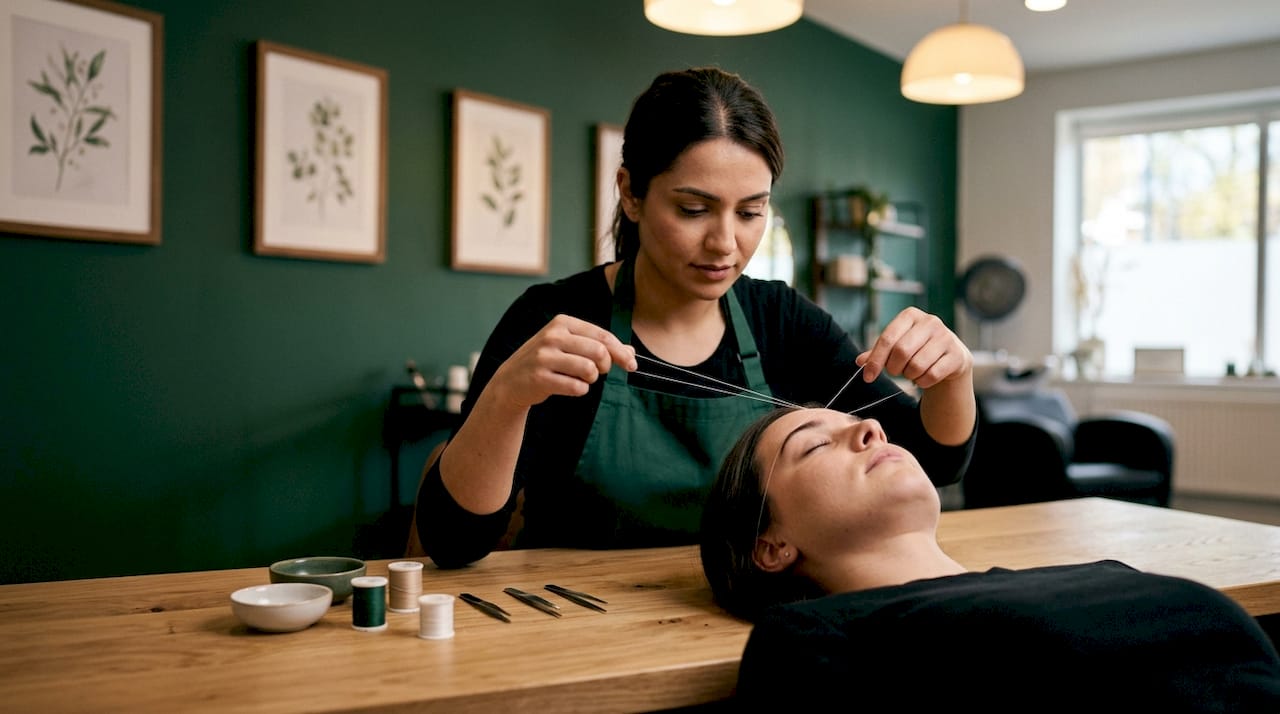
Threading, also called epilation by thread, works by forming a loop of cotton thread into a figure-eight shape, then twisting it four to five times to create tension. The technician holds one end of the loop with their teeth or fingers and the other with their hand, then opens and closes the loop in a rapid motion across the skin. That motion traps individual hairs between the twisted sections and pulls them cleanly from the root. The hand method is favored by professionals for its superior speed and control.
Here is the typical sequence a skilled technician follows during a brow threading appointment:
- Cleanse the area. The skin around the brows is wiped clean to remove oil, makeup, and sunscreen. A clean surface lets the thread grip hairs more effectively.
- Map the brow shape. The technician assesses your facial structure and marks or visualizes the ideal arch, tail, and start point before removing a single hair.
- Tighten the skin. You or the technician will pull the skin taut around the brow. Taut skin allows the thread to glide cleanly and reduces the chance of the thread catching skin instead of hair.
- Thread the underside. The technician works along the lower edge of the brow first, removing stray hairs below the natural brow line to define the arch.
- Thread the top. The upper edge is shaped next, removing any hairs above the brow line that disrupt the intended shape.
- Define the tail and head. The outer tail and inner head of the brow are cleaned up to create a sharp, symmetrical finish.
- Remove stray hairs. Any isolated hairs between the brows or on the forehead are removed last.
The entire process typically takes between five and fifteen minutes depending on the density of your brows and the complexity of the shape. The twist tension from four to five rotations is critical. Too loose and the thread breaks hairs instead of pulling from the root. Too tight and the motion slows, reducing precision.
Pro Tip: Avoid applying moisturizer or facial oil on the day of your appointment. Slippery skin makes it harder for the thread to grip fine hairs, which leads to breakage rather than clean follicle removal.
What are the benefits of brow threading compared to waxing?
Threading and waxing both remove hair at the follicle, with regrowth appearing in three to six weeks for both methods. The difference is in how each method gets there. Waxing applies a warm adhesive substance across a broad area and strips multiple hairs at once. Threading isolates individual hairs or entire rows with millimeter-level control. That distinction matters enormously when you are shaping something as precise as an eyebrow.
Here is how the two methods compare across the factors that matter most to brow grooming clients:
| Factor | Threading | Waxing |
|---|---|---|
| Precision | Targets individual hairs or rows | Removes broad areas at once |
| Chemicals | None. Cotton thread only | Wax resin, sometimes with additives |
| Heat | None | Warm or hot wax applied to skin |
| Sensitive skin suitability | High. Safe for rosacea and eczema | Lower. Heat and chemicals can trigger reactions |
| Short hair removal | Yes. Works on very short hairs | No. Hair must be long enough to adhere |
| Risk of over-removal | Low with a skilled technician | Higher due to broad application |
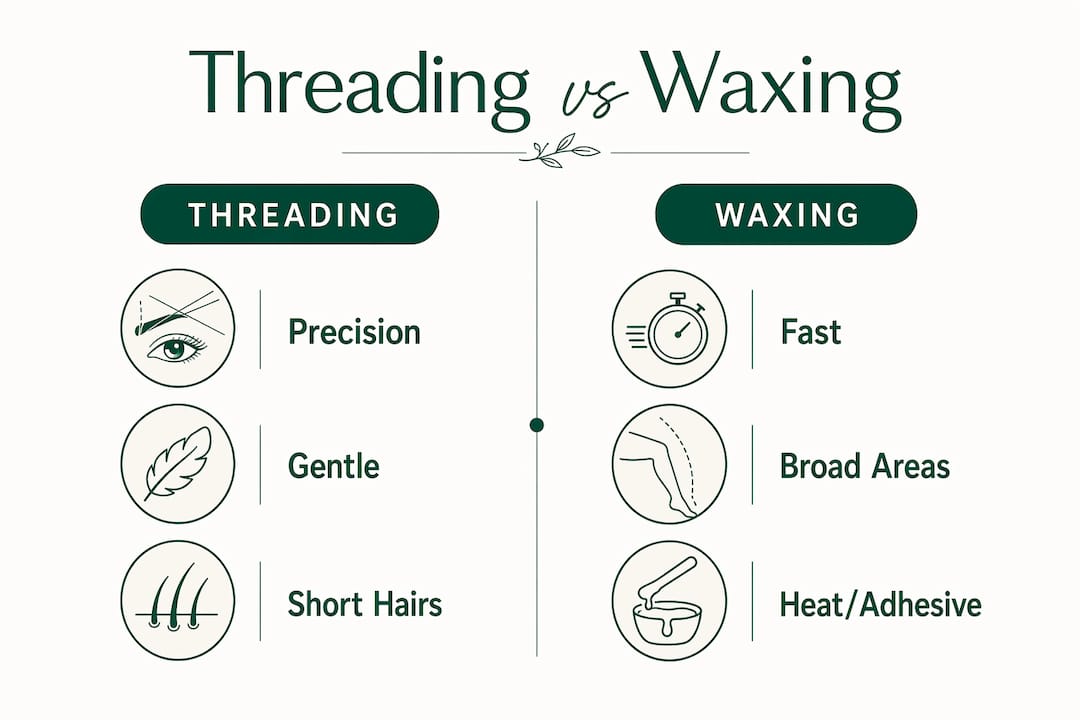
Threading is gentler on sensitive skin because it involves no chemicals, no heat, and no adhesive. For clients managing rosacea, eczema, or other skin conditions, that matters. Waxing can strip the top layer of skin along with the hair, which causes redness and sometimes peeling. Threading leaves the skin surface intact.
Clients on prescription skincare products face an additional consideration. Retinoids, including tretinoin and retinol, thin the skin and make it more reactive to heat and adhesives. Threading is safe for retinoid users where waxing is contraindicated. If you are on a prescription skincare routine, threading is the safer choice by default.
Threading also handles shorter hairs that waxing simply cannot grip. Threading removes hairs as short as a few millimeters, which means you can book an appointment sooner after your last session without waiting for regrowth to reach a workable length.
Pro Tip: If you use a retinoid or exfoliating acid in your skincare routine, stop applying it to the brow area two to three days before your threading appointment. This reduces the chance of surface sensitivity even though threading itself does not involve heat or chemicals.
How does threading compare to tweezing and other methods?
Threading sits between tweezing and waxing in terms of speed and scope. Tweezing removes one hair at a time using metal tweezers, which gives you control but makes shaping a full brow extremely slow. A complete brow shape with tweezers can take twenty to thirty minutes at home. Threading achieves the same result in five to ten minutes in a salon.
The table below maps out the key differences across three common brow hair removal methods:
| Method | Speed | Precision | Skin impact | Best for |
|---|---|---|---|---|
| Threading | Fast (5-15 min) | Very high | Minimal | Full brow shaping, sensitive skin |
| Waxing | Fast (5-10 min) | Moderate | Moderate to high | Large areas, coarser hair |
| Tweezing | Slow (20-30 min) | Very high | Minimal | Maintenance between appointments |
Threading and tweezing share a precision advantage over waxing. Both remove hair from the follicle without disturbing the surrounding skin. The difference is volume. Threading can remove an entire row of hairs in a single pass, which is why professionals prefer it for shaping. Tweezing remains useful for removing one or two stray hairs between appointments at home.
Waxing works well for clients with coarser, denser hair who want a fast result and are not concerned about fine-detail shaping. It is also widely available and familiar to most clients. The trade-off is that waxing is harder to control at the edges of the brow, which is where over-waxing mistakes most commonly occur. Threading’s millimeter-level control makes those mistakes far less likely in the hands of a trained technician.
For clients with very fine or sparse brow hair, threading is often the only method that can reliably remove short, thin hairs without leaving gaps or causing skin irritation.
What to expect after brow threading and how to care for your brows
Redness and mild sensitivity immediately after threading are normal. The skin around the brow has had hairs pulled from the follicle, so a light pink flush is expected and typically fades within thirty to sixty minutes. Most clients feel a brief snapping or scratching sensation during the session, and that discomfort drops off quickly once the thread stops moving.
Follow these aftercare steps to keep your skin calm and your brow shape intact:
- Avoid touching the brow area for at least two hours after your appointment. Fingers carry bacteria that can enter open follicles.
- Skip makeup on the brow area for the rest of the day. Powder and pencil products can clog freshly opened follicles.
- Do not apply active skincare such as retinoids, AHAs, or BHAs to the brow area for 24 hours post-threading.
- Avoid heat exposure including saunas, steam rooms, and intense exercise for at least four hours. Heat increases inflammation in freshly threaded skin.
- Apply a gentle, fragrance-free moisturizer or aloe vera gel to soothe the area if redness persists beyond an hour.
For maintaining your brow shape, most clients book threading appointments every two to three weeks. Tolerance to the sensation increases with regular sessions, so first-timers who find the experience uncomfortable typically report much milder sensations by their third or fourth appointment.
Watch for signs that something is not right. Prolonged redness lasting more than 24 hours, raised bumps that do not resolve, or any sign of infection such as warmth and pus are not normal reactions. These are rare but worth flagging to your technician or a dermatologist.
Pro Tip: Book your threading appointment at least 48 hours before any major event. The redness resolves quickly for most people, but giving yourself a buffer means you will not be dealing with any residual skin sensitivity on the day.
Key takeaways
Brow threading is the most precise, chemical-free method for eyebrow shaping, making it the top choice for sensitive skin and clients who want defined, lasting results.
| Point | Details |
|---|---|
| Threading removes hair at the root | A twisted cotton thread pulls hairs from the follicle, with regrowth in three to six weeks. |
| No chemicals or heat involved | Threading is safe for sensitive skin, rosacea, eczema, and clients using retinoids. |
| Precision exceeds waxing | Threading achieves millimeter-level control, reducing the risk of over-removal at brow edges. |
| Short hairs are not a barrier | Threading grips hairs too short for wax, so you can book appointments more frequently. |
| Aftercare is simple but specific | Avoid heat, actives, and makeup on the brow area for at least 24 hours post-appointment. |
Why I always recommend threading first for new brow clients
I have worked with hundreds of clients across every brow type, from sparse and fine to dense and unruly. The single most common regret I hear from new clients is that they over-waxed for years before switching to threading. Waxing is fast and familiar, but it rewards speed over accuracy. Threading rewards skill, and a skilled technician can build a brow shape over several sessions that genuinely fits your face rather than just removing what is obviously out of place.
The pain question comes up constantly, and I want to be direct about it. Threading does sting, especially the first time. The sensation is a quick scratch across the skin, not a prolonged burn. By the second or third session, most clients barely notice it. The clients who avoid threading because they heard it hurts are often the same ones who have been tolerating waxing burns and skin peeling for years without complaint.
One thing most articles skip is the technician selection piece. Threading looks deceptively simple. It is not. The thread tension, the speed of the hand motion, and the angle of the loop all determine whether you leave with a clean arch or broken hairs and irritated skin. Ask to see a technician’s portfolio. Ask how long they have been threading specifically, not just how long they have worked in beauty. A technician with two years of dedicated threading experience will consistently outperform someone who learned it as a secondary skill.
Threading also works beyond the brows. Upper lip, chin, and sideburn hair all respond well to the technique, and the same precision that defines a brow arch translates to clean, sharp lines anywhere on the face.
— Apna
Get perfectly shaped brows at Browvibe
Browvibe’s certified beauty artists specialize in precision brow threading services tailored to your facial structure and personal preferences. Every appointment starts with a full consultation so your technician understands exactly what you want before a single hair is removed. Browvibe uses only premium cotton thread and gentle techniques, making every session suitable for even the most sensitive skin. Whether you are booking your first threading appointment or switching from waxing, the team at Browvibe delivers defined, balanced brows that last. Book your appointment today and see the difference that expert threading makes.
FAQ
What is brow threading exactly?
Brow threading is a hair removal method that uses a doubled, twisted cotton thread to pull eyebrow hairs from the follicle. It originated in India and the Middle East and is now widely practiced in salons across the United States for its precision and gentleness.
Does brow threading hurt?
Threading produces a brief snapping or scratching sensation, particularly for first-time clients. Discomfort decreases significantly with repeated sessions, and most regular clients report only mild tingling by their third or fourth appointment.
How long does brow threading last?
Threading removes hair at the follicle, so results typically last three to six weeks before regrowth becomes visible. Most clients maintain their shape with appointments every two to three weeks for consistently clean brows.
How much does eyebrow threading cost?
Threading costs vary across the United States, with averages ranging from around $13 to $42 depending on location. California averages around $42, while states like Georgia average closer to $13.
Is threading better than waxing for sensitive skin?
Threading is the safer choice for sensitive skin because it uses no chemicals, heat, or adhesives. It is specifically recommended for clients with rosacea, eczema, or those using prescription retinoids, where waxing can cause reactions or skin damage.