
A lash lift patch test is a safety check where small amounts of every product used in a lash lift are applied to the skin to detect allergic reactions before the full treatment. The industry term for this process is a pre-treatment sensitivity test, though “patch test” is the standard shorthand used by salons and clients alike. Skipping this step puts clients at real risk. Products like lift lotion, neutralizer, adhesive, and tint each contain chemicals that can trigger reactions ranging from mild redness to serious swelling. Browvibe treats every patch test as a non-negotiable part of the client experience, not an optional add-on.
What is a lash lift patch test and what does it include?
A lash lift patch test applies every product used in the service to a small area of skin to check for irritation before the full treatment begins. Common test locations include the inner elbow and behind the ear. These spots are used because the skin there is thin and sensitive, making reactions easier to spot.
The test must cover every chemical the client will encounter during the actual service. Testing all components matters because a client may react to any single ingredient, and missing even one product risks missing the allergen that causes a reaction. A lash lift typically involves two or three step lotions, a neutralizer, an adhesive, and a tint mixed with an oxidizer if color is being added.
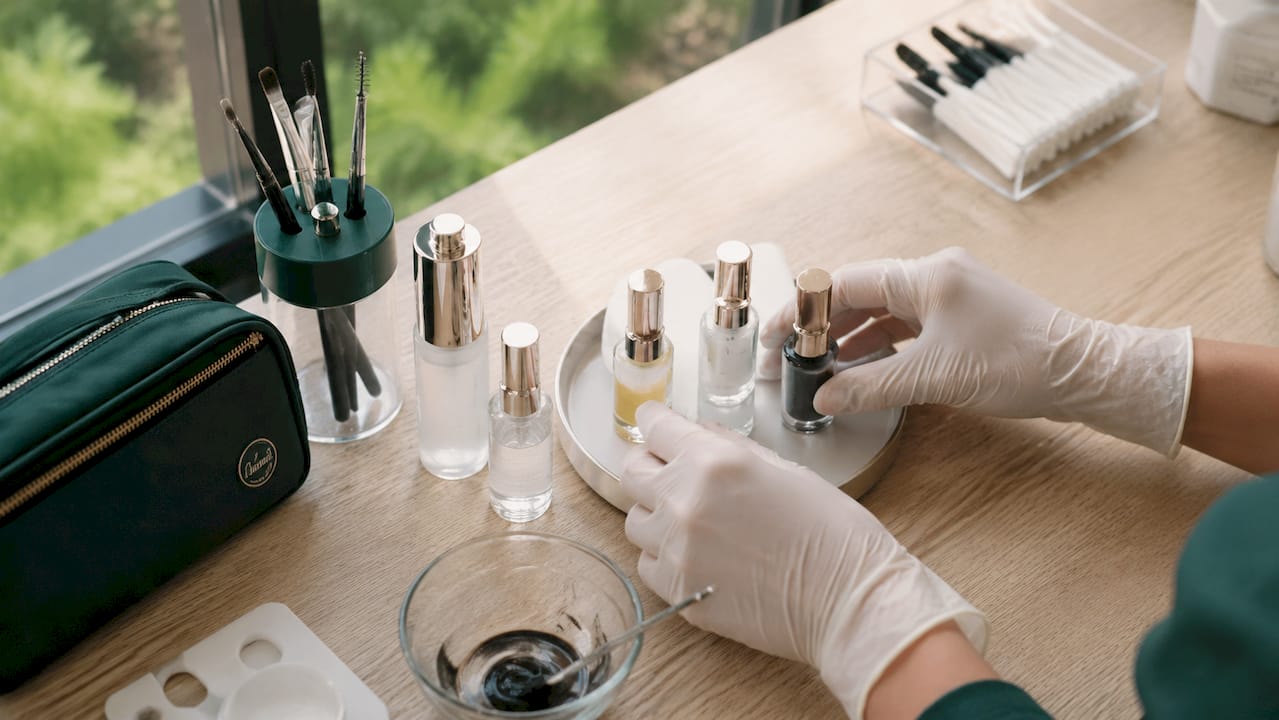
What is a lash lift, exactly? It is a semi-permanent treatment that curls and lifts natural lashes from the base using a chemical process, creating the appearance of longer, fuller lashes without extensions. Because the process relies on chemical solutions applied near the eyes, the stakes for an allergic reaction are higher than with many other beauty treatments.
Products that must be included in every patch test
A thorough patch test covers all of the following:
- Lift lotion (Step 1): The first chemical applied during the service, responsible for breaking down the lash structure to allow reshaping.
- Neutralizer (Step 2): Rebuilds the lash bonds in the new lifted position. This is a separate chemical from the lift lotion and must be tested independently.
- Adhesive: Used to secure lashes to the silicone rod or shield during the treatment. Hygiene during testing is critical here. Never apply adhesive directly from the bottle brush to skin. Dispense a small amount onto a single-use micro brush for each client.
- Tint and oxidizer: If the client is adding a lash tint to their service, both the tint and the developer must be patch tested together, mixed as they would be during the actual treatment.
Pro Tip: Always test the tint and oxidizer as a mixed formula, not separately. The chemical reaction between the two is what the skin will actually encounter, so testing them individually does not replicate real-world exposure.
Missing any one of these products defeats the purpose of the test. Skipping a single product may leave the allergen responsible for a reaction completely undetected until the full service is underway.
How long does a patch test take, and how do you read the results?
The application phase of a patch test is brief. Products are left on the skin for approximately 10 minutes, then removed gently without covering the test site. That 10-minute window mirrors the contact time during the actual treatment and gives the skin a realistic exposure.
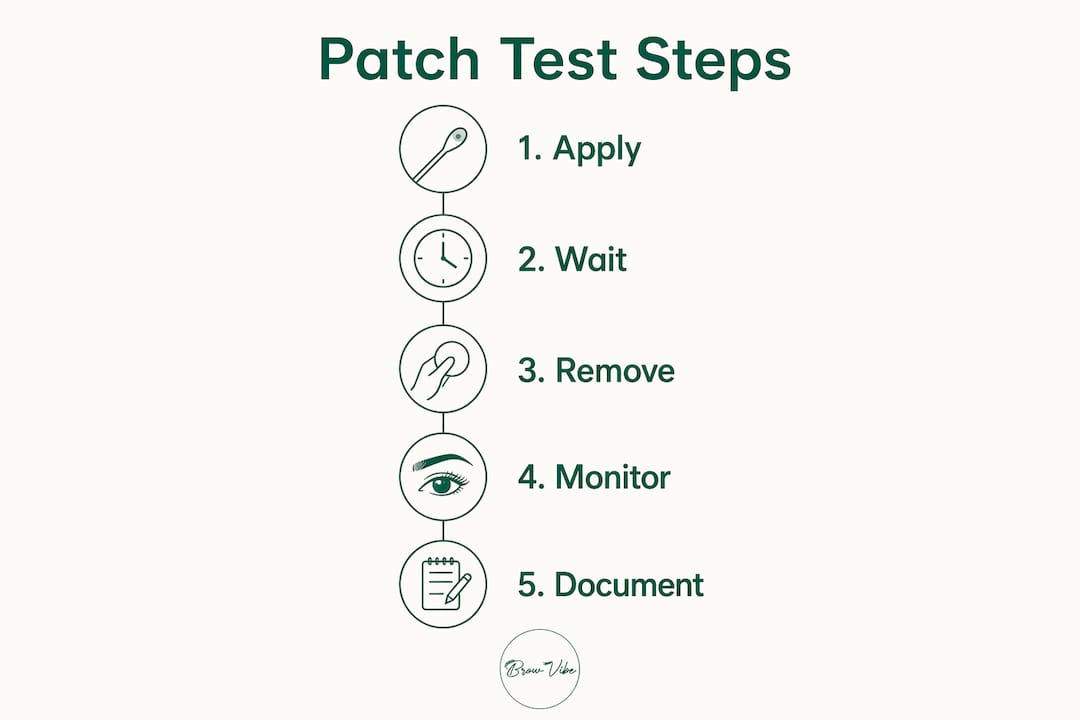
The more important phase is what happens after. Clients monitor the test area for 24 to 48 hours following product removal. This window exists because the most common type of reaction to lash lift chemicals is a delayed-type hypersensitivity response. These reactions do not appear immediately. They develop hours after exposure, which is why a quick 15-minute check at the salon is not sufficient on its own.
How to read the results
The following sequence gives the clearest picture of how the skin is responding:
- Immediately after removal (0–15 minutes): Check for any instant redness or irritation. Mild, brief flushing that fades within minutes is generally a normal response to product contact.
- At 24 hours: Inspect the test area for redness, itching, burning, or swelling. Any raised skin or persistent irritation at this stage signals a sensitivity.
- At 48 hours: Conduct a final check. Persistent redness or swelling at this point is a clear sign that the treatment should not proceed.
If any of these symptoms appear, the lash lift must be postponed. The client should seek medical advice if the reaction is severe or does not resolve. A clear patch test result at 48 hours is a green light to proceed, but it is not an absolute guarantee. Reactions can still occur during the full treatment even after a negative patch test. Clients should tell their technician immediately if they feel any burning, itching, or discomfort during the service.
A clear patch test result reduces risk. It does not eliminate it. Clients and technicians must stay alert throughout the full treatment.
Why does patch testing matter for client safety and salon standards?
Patch testing is the single most effective step a salon can take to reduce the risk of a serious allergic reaction during a lash lift. Reactions to lash lift chemicals can range from localized redness to swelling around the eyes, and in rare cases, more severe responses. Catching a sensitivity before the treatment begins protects the client from a reaction in a highly vulnerable area.
The benefits extend beyond the client’s physical safety. Documented patch tests provide both client safety assurance and salon protection from legal and insurance claims by evidencing informed risk management. Many insurance providers require proof of patch testing for coverage to apply. Without it, a salon may be exposed to liability if a client has an adverse reaction.
What good documentation looks like
Proper records turn a patch test from a verbal exchange into a traceable safety event. Strong documentation includes:
- Product lot numbers: Identifies the exact batch of each chemical used, which matters if a product recall or quality issue arises.
- Test date and technician initials: Creates a clear timeline and assigns accountability.
- Client signature on a consent form: Confirms the client understood the risks and agreed to proceed after a clear result.
- Reaction notes: Records any observations from the immediate and delayed checks, even if the result was clear.
Signed consent forms and records also build client trust. When a client sees that their technician tracks every detail, it signals professionalism and care. Client education around patch testing increases trust and the likelihood of clients choosing professional, safe lash lift services over unverified alternatives.
Patch testing is not optional for salons that take their professional standards seriously. It is a baseline requirement, not a courtesy.
How to prepare for and schedule a lash lift patch test
Timing the patch test correctly is as important as performing it. The test must be done at least 24 to 48 hours before the scheduled full lash lift appointment. This gives the monitoring window enough time to complete before the client arrives for their treatment.
The most practical approach is to build the patch test into the booking process. When a client schedules a lash lift, the salon confirms a patch test appointment 48 hours before. This removes any last-minute scramble and sets clear expectations from the start.
Client preparation for the patch test is straightforward:
- Do not wash or scrub the test area during the monitoring period. Excessive washing can remove product residue and interfere with the result.
- Avoid applying other products to the test site, including moisturizer, sunscreen, or makeup.
- Check the area at 24 hours and again at 48 hours. Take a photo if possible to compare any changes.
- Contact the salon immediately if any redness, itching, or swelling appears before the 48-hour mark.
- Repeat the patch test if more than 12 months have passed since the last one, or if the salon has changed product brands or formulations.
Pro Tip: Ask your technician to note the product lot numbers on your patch test record. If you ever have a reaction in the future, knowing the exact batch helps identify whether a formulation change was involved.
Reviewing lash lift consultation questions before your appointment helps you understand what to expect and what to ask your technician about the products being used.
Key Takeaways
A lash lift patch test is a required safety step that must include every product used in the service, monitored for 24 to 48 hours, and documented with product details and client consent.
| Point | Details |
|---|---|
| Test every product | Patch test lift lotion, neutralizer, adhesive, and tint with oxidizer to avoid missing any allergen. |
| Monitor for 24–48 hours | Delayed reactions are the most common type and will not appear in the first few minutes after application. |
| Document every test | Record product lot numbers, test date, technician initials, and a signed client consent form. |
| Clear result is not a guarantee | Clients should still report any discomfort during the full treatment, even after a negative patch test. |
| Repeat after 12 months | Sensitivity can develop over time, so patch tests should be redone annually or when products change. |
Why I never skip the patch test conversation
Working in the beauty industry, I have seen the full range of client attitudes toward patch testing. Some clients treat it as a formality. Others push back because it adds an extra appointment to their schedule. Both reactions are understandable. Neither changes the reality of what can happen when the step is skipped.
The reactions I have seen from untested clients are not always dramatic. Sometimes it is persistent redness that takes days to settle. Occasionally it is swelling that genuinely frightens the client. What strikes me every time is how preventable it was. A 10-minute application and a 48-hour wait would have caught the sensitivity before it became a problem.
The misconception I encounter most often is that clients assume they are safe because they have had a lash lift before. Sensitivity can develop with repeated exposure to the same chemicals. A client who had no reaction two years ago may react today. This is not a theoretical risk. It is a documented pattern with chemical sensitizers, and it is exactly why lash lift best practices call for regular retesting.
My advice is simple. Never let convenience pressure you into skipping a patch test. The appointment takes minutes. The documentation takes seconds. The protection it provides is real and lasting.
— Apna
Browvibe’s approach to safe lash lift services
Browvibe builds patch testing into every lash lift booking as a standard part of the client experience, not an afterthought.
Browvibe’s certified beauty artists follow thorough patch test protocols, using single-use applicators, testing every product in the service, and documenting results with full client consent. Every client receives a consultation that covers product selection, sensitivity history, and what to watch for during the monitoring period. From the patch test to the finished lift, the process is designed around your safety and comfort. Visit Browvibe’s services page to book a consultation and find out how professional lash care should feel.
FAQ
What is a lash lift patch test?
A lash lift patch test applies small amounts of all products used in the service, including lift lotion, neutralizer, adhesive, and tint, to a skin area to check for allergic reactions before the full treatment.
Is a patch test necessary for a lash lift?
Yes. Patch testing is an industry-standard safety requirement that protects clients from allergic reactions and protects salons from liability. Insurance providers often require documented patch tests for coverage to apply.
How long does a lash lift patch test take?
Products are applied and left on the skin for about 10 minutes, then removed. The client then monitors the test area for 24 to 48 hours to check for delayed reactions before the full appointment proceeds.
What reactions should I watch for after a patch test?
Watch for redness, itching, burning, or swelling at the test site. Any persistent or raised reaction within 48 hours means the lash lift should be postponed and a doctor consulted if needed.
How often should I redo a lash lift patch test?
Redo the patch test if more than 12 months have passed since the last one, if the salon has switched product brands, or if you have developed any new skin sensitivities since your previous treatment.