Structured brow shaping is a professional service that designs eyebrow shapes based on your facial anatomy, using techniques like brow mapping and the golden ratio to create balanced, defined results. The industry term for this process is brow sculpting, and it goes far beyond basic tidying. A full sculpting appointment typically runs 30–60 minutes and includes facial analysis, mapping, hair removal, and optional tinting. The goal is not a trendy shape. The goal is a shape that fits your face. Browvibe builds every service around this principle, combining precision threading with personalized consultations to deliver results that last.
What is brow mapping and how does it guide structured brow shaping?
Brow mapping is the foundation of any structured shaping service. It uses the golden ratio technique to identify three key points on each brow: the start, the arch, and the end. Each point aligns with a specific facial feature to create natural symmetry.
- Start point: aligns vertically with the inner edge of the nostril
- Arch point: falls directly above the outer edge of the pupil
- End point: angles from the outer nostril through the outer corner of the eye
Professionals use tools like brow pencils and mapping strings to mark these points before removing a single hair. This prevents accidental over-removal and gives the artist a clear design to follow.
Brow mapping is not a rigid formula. Professionals customize the technique by factoring in hairline position, forehead proportions, and bone structure. Two people with the same face shape can end up with noticeably different brow designs because of these individual variables. That adaptability is what separates brow sculpting from generic shaping.
The table below shows how brow mapping differs from standard shaping techniques.
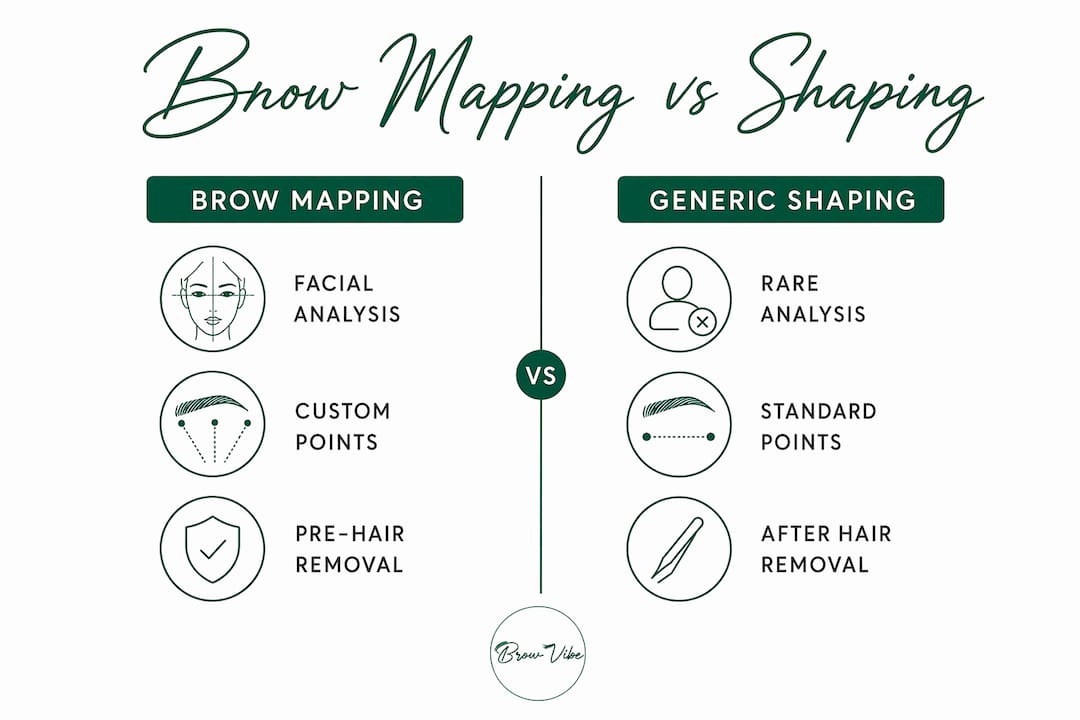
| Feature | Brow mapping | Generic shaping |
|---|---|---|
| Facial analysis | Yes, before any hair removal | Rarely included |
| Symmetry method | Golden ratio with marked guide points | Visual estimate |
| Customization | Adapts to bone structure and eye placement | Follows a standard template |
| Precision tools | Mapping string, brow pencil, ruler | Tweezers or wax strips only |
| Result consistency | High, repeatable across appointments | Variable |
How do professionals execute structured brow shaping techniques?
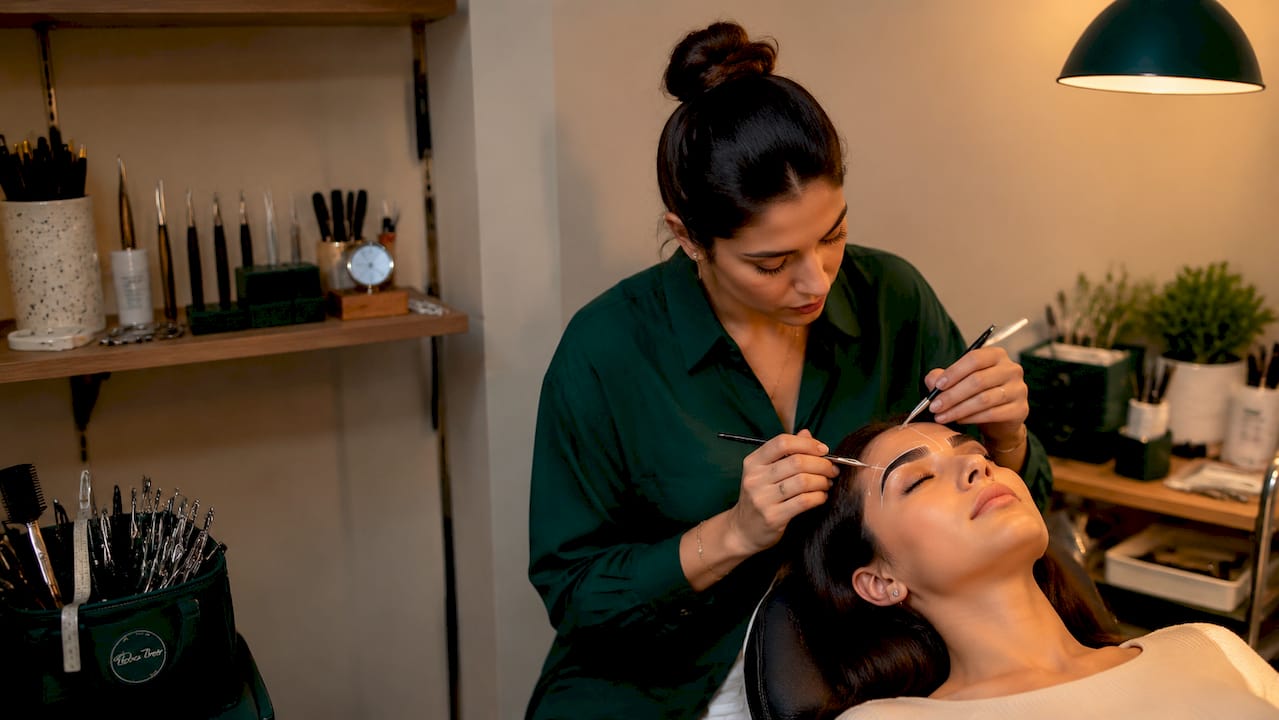
A professional brow sculpting appointment follows a clear sequence. Each step builds on the last to deliver a result that looks natural and lasts.
- Consultation and facial assessment. The artist reviews your face shape, eye spacing, and existing brow growth. They discuss your style preferences and explain what is achievable with your current hair.
- Brow mapping. Using a mapping string and a light pencil, the artist marks the start, arch, and end points. A light-colored pencil draws guidelines before any removal begins, preventing over-plucking.
- Hair removal. The artist removes hair outside the mapped design using waxing, threading, or tweezing. Threading is particularly effective for fine detail work around the arch. Browvibe uses precision threading as a core technique because it removes hair at the root without pulling the skin.
- Tinting (optional). A tint fills in sparse areas and adds depth to the brow color. This step is especially useful for clients with light or gray hair.
- Brow lamination (optional). Brow lamination lifts and sets brow hairs in a uniform direction, adding fullness and a groomed finish without makeup.
- Finishing touches. The artist brushes and sets the brows, checks symmetry from multiple angles, and makes any final adjustments.
The entire process is tailored to individual preferences and anatomy. No two clients leave with identical results, even if they request the same style.
Pro Tip: Slanted tweezers give the most control when cleaning up stray hairs near the arch. Straight-edged tweezers are harder to angle precisely and increase the risk of removing hairs you meant to keep.
What are the benefits of brow shaping compared to at-home grooming?
Professional brow shaping enhances facial symmetry in a way that at-home grooming rarely achieves. Well-mapped brows lift the appearance of the eyes, add definition to the face, and create a more balanced, youthful look without any invasive procedure. That effect is difficult to replicate with a mirror and a pair of tweezers.
Here is where professional shaping consistently outperforms DIY grooming:
- Symmetry: A trained artist checks balance from multiple angles. Most people cannot accurately assess their own facial symmetry in a bathroom mirror.
- Preventing over-plucking: Incorrect tools or over-plucking can distort brow shape permanently. A professional maps before removing, so nothing comes off by accident.
- Guided regrowth: Professionals recommend a 3–4 week schedule to preserve design integrity and train hair growth patterns over time.
- Avoiding common mistakes: Droopy tails, overly harsh fronts, and shortened brows are common errors that the golden ratio method prevents.
- Confidence: Defined, balanced brows change how people perceive their own appearance. Clients consistently report feeling more polished and put-together after a professional shaping session.
At-home grooming has its place for maintenance between appointments. But the design work, the mapping, and the initial shaping should always start with a professional. Trying to recreate a mapped brow at home without training is the most common reason clients arrive at salons with uneven or over-thinned brows that take months to correct.
How to choose and maintain the right brow shape for your face
No single brow shape fits every face. The right design depends on eye spacing, face shape, and bone structure. A shape that looks striking on one person can look unbalanced on another.
Here are the general guidelines professionals use by face shape:
- Round faces: A higher arch creates the illusion of length and lifts the center of the face.
- Oval faces: Most brow styles work well. A soft, natural arch with moderate thickness tends to suit oval proportions best.
- Heart-shaped faces: A high angular arch balances a wider forehead against a narrower chin.
- Longer faces: Flatter brows with minimal arch reduce the appearance of length and add horizontal balance.
Aging faces benefit from specific adjustments too. Shortening the brow tail endpoint by 2–3 mm prevents the outer eye area from appearing dragged downward, which keeps the overall look lifted and youthful.
Pro Tip: Between appointments, resist the urge to tweeze stray hairs at home. Use a highlighting concealer to mask them instead. This keeps the mapped shape intact and gives your artist a clean canvas at your next visit.
Maintenance habits matter as much as the initial shaping. Hair grows in phases, and reshaping can take 3–6 months for optimal results when starting from an uneven baseline. Sticking to a regular appointment schedule is the single most effective thing you can do to maintain your brow design. For a deeper look at brow grooming habits that support long-term results, Browvibe covers the full routine in detail.
Key Takeaways
Structured brow shaping uses facial analysis, brow mapping, and professional hair removal techniques to create balanced, lasting results that at-home grooming cannot reliably replicate.
| Point | Details |
|---|---|
| Brow mapping is the foundation | The golden ratio method marks start, arch, and end points before any hair is removed. |
| Customization beats templates | Professionals adapt mapping to bone structure, eye spacing, and hairline for individual results. |
| Professional shaping prevents damage | Over-plucking and distorted shapes are the most common outcomes of unsupervised at-home grooming. |
| Maintenance schedule matters | A 3–4 week appointment cycle preserves design integrity and trains hair growth over time. |
| Face shape guides brow design | Round, oval, heart-shaped, and longer faces each benefit from distinct arch heights and tail lengths. |
Why I think most people underestimate what brow shaping actually does
Most clients come in focused on removing hair. They leave realizing the appointment was actually about designing a frame for their face. That shift in perspective is the most consistent thing I see, and it never gets old.
The misconception I hear most often is that structured shaping is only for people with unruly or thick brows. The opposite is true. Clients with sparse or fine brows benefit just as much, sometimes more, because precise mapping and tinting can create the appearance of fullness where very little hair exists.
The other thing people consistently get wrong is patience. Brow shaping is not a one-appointment fix. If years of over-plucking have disrupted your natural growth pattern, the first few sessions are about recovery and guidance, not perfection. Trusting that process is hard, but it is the only way to get lasting results.
My strongest advice: stop chasing the brow trend of the moment. Thick, laminated brows look great on some faces and completely wrong on others. The best brow shape is the one that makes your eyes look more open and your face more balanced. A trained artist can see that. A social media filter cannot.
— Apna
Browvibe’s professional brow shaping services
Browvibe offers personalized brow sculpting appointments that start with a full consultation and facial analysis before any shaping begins.
Every session includes brow mapping using the golden ratio method, followed by precision threading or waxing, and optional tinting to add depth and definition. Browvibe’s certified artists tailor each design to your face shape, eye spacing, and personal style goals. Whether you are starting fresh or maintaining an existing shape, the team builds a plan that fits your features, not a trend. Book your appointment through Browvibe’s services page and see what a properly mapped brow can do for your overall look.
FAQ
What is structured brow shaping?
Structured brow shaping, also called brow sculpting, is a professional service that uses facial analysis and brow mapping to design eyebrow shapes tailored to individual features. A full appointment typically includes consultation, mapping, hair removal, and optional tinting.
How often should you get professional brow shaping?
Professionals recommend a maintenance appointment every 3–4 weeks to preserve the mapped design and guide hair growth patterns consistently over time.
Does brow shaping work for sparse or thin brows?
Yes. Brow mapping and tinting can create the appearance of fullness and definition even when natural hair growth is sparse or uneven.
What is the golden ratio in brow shaping?
The golden ratio method identifies three points on each brow: the start aligned with the inner nostril, the arch above the pupil, and the end angled from the outer nostril to the outer eye corner. These points create natural symmetry based on your facial proportions.
Is structured brow shaping worth it compared to at-home grooming?
Professional shaping prevents the most common at-home mistakes, including over-plucking, uneven arches, and shortened brows. The mapped design and expert technique deliver results that are difficult to replicate without training.