A lash lift is a semi-permanent treatment that curls and lifts your natural lashes from the root, creating a wide-eyed, defined look without extensions or daily curling. The procedure reshapes each lash using silicone shields and a two-step chemical process, and results last 6–8 weeks depending on your natural lash growth cycle. A single appointment runs 45–60 minutes. That makes it one of the most time-efficient beauty treatments available for anyone who wants polished lashes with zero daily effort.
What is a lash lift and how does it work step by step?
A lash lift works by softening lash bonds, reshaping each hair over a silicone shield, then setting the new curl in place with a fixative solution. The result is a natural, wide-eyed look that requires no extensions, no glue, and no mascara to maintain. Understanding each step helps you know exactly what to expect when you sit down for your appointment.
Here is how the process unfolds:
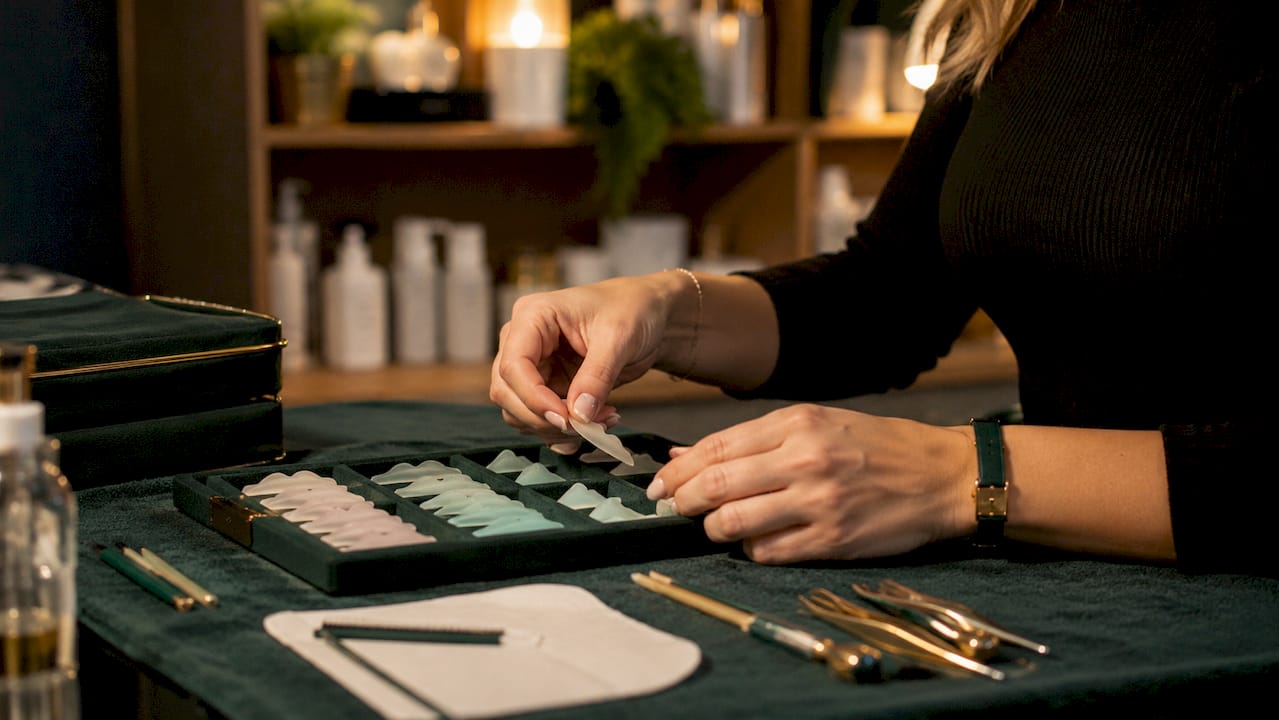
- Consultation and shield selection. Your technician assesses your lash length, density, and eye shape to choose the right silicone shield size. Correct shield selection is critical. The wrong size leads to over-processing or a curl that drops within days.
- Lash preparation. Your lashes are cleaned to remove all oil, makeup, and residue. Clean lashes bond more evenly to the shield and absorb the chemical solution at a consistent rate.
- Shield application. The silicone shield is placed on your eyelid and your lashes are combed upward and adhered to its surface. The shape of the shield determines the final curl direction and height.
- Softening solution. A lifting cream is applied to the base of your lashes. This solution breaks down the disulfide bonds inside each hair, making the lash pliable enough to take on the shield’s shape.
- Setting solution. A neutralizing cream is applied next. This rebuilds the bonds in their new position, locking the curl permanently until your lashes naturally shed and regrow.
- Nourishing treatment. Most technicians finish with a conditioning serum to restore moisture and reduce brittleness caused by the chemical process.
Pro Tip: Ask your technician to show you the shield sizes before the appointment starts. Seeing the options helps you understand why one size suits your lash length better than another.
What are the different lash lift techniques?
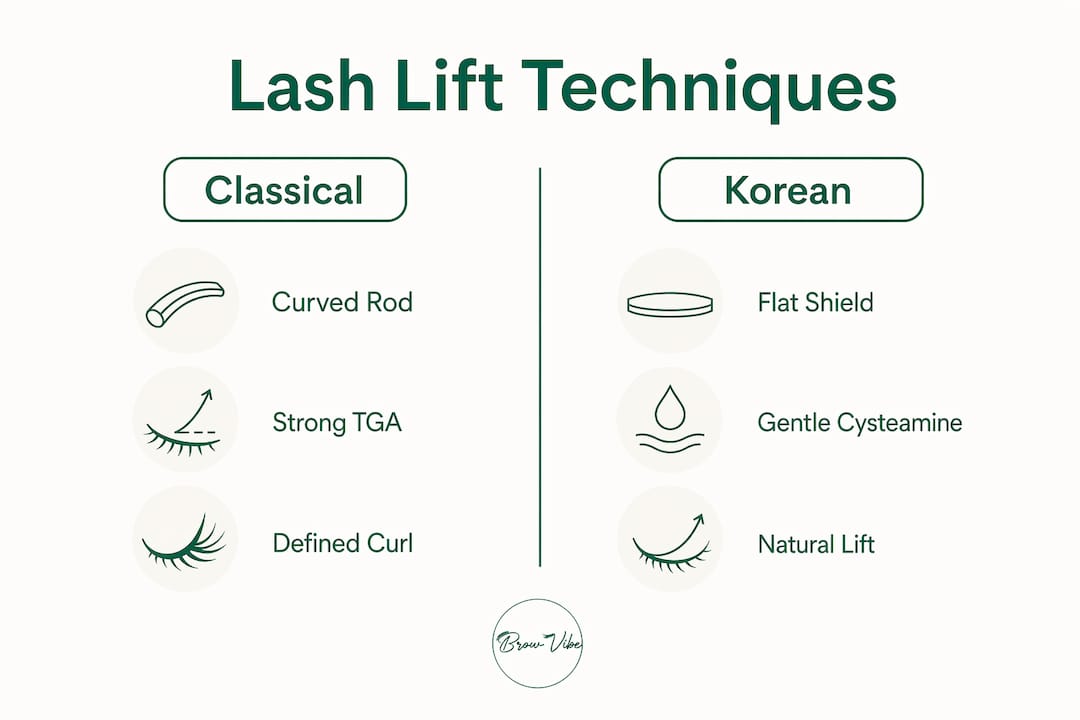
Three main techniques define the current lash lift market: classical, Korean, and hybrid. Each uses a different tool geometry and chemical formula, which means each suits a different lash type.
| Technique | Shield type | Chemical used | Best for |
|---|---|---|---|
| Classical | Curved rod | TGA (Thioglycolic acid) | Fine to medium lashes with natural curl |
| Korean | Flat shield | Cysteamine HCl | Coarse, straight, or downward-growing lashes |
| Hybrid | Combination | Gentler formula blend | Mixed lash types needing directional control |
Classical lifts use curved rods and a stronger TGA-based solution. TGA processes quickly and creates a defined curl, but it carries a higher risk of over-processing if timing is off. This technique works well for lashes that already have some natural wave.
Korean lash lifts use flat shields and a milder Cysteamine HCl chemistry. The flat shield redirects lash growth at the base rather than wrapping the hair into a curl. That makes it the best choice for lash lift for short straight lashes or lashes that grow downward. The gentler chemistry also means less risk of brittleness after repeated treatments.
Hybrid lifts combine the structural tools of classical methods with the gentler chemistry of Korean formulas. Hybrid techniques allow technicians to create tailored shapes, such as a “foxy” lift that raises the outer corners more than the inner ones. This level of customization is why the hybrid approach has become the preferred method among experienced artists.
Pro Tip: If you have coarse or resistant lashes, request a Korean or hybrid lift specifically. A classical lift on coarse lashes often under-processes at the base and over-processes at the tip.
Why does a lash lift suit natural lashes and open up the eyes?
A lash lift improves lash visibility by lifting from the root, not by adding volume or length. That distinction matters. Extensions add weight and bulk. A lift simply redirects the angle at which your existing lashes grow, which exposes more of their length to the eye.
Why lash lift opens up the eyes comes down to geometry. Lashes that grow straight out or downward partially obscure the upper eyelid. When those same lashes are lifted upward and back, they frame the eye from above rather than covering it. The result is a more open, awake appearance without any change in lash count or thickness.
Key reasons a lash lift suits natural lashes:
- No added weight. Extensions sit on top of your natural lash and can cause premature shedding. A lift adds nothing foreign to the lash.
- Works with your existing lashes. The treatment enhances what you already have rather than masking it with synthetic fibers.
- Minimal maintenance. Lash lifts suit minimal makeup users because the curl holds through showers, workouts, and sleep without daily touch-ups.
- Pairs well with tinting. A lash lift combined with tint darkens the lashes without adding volume, making them appear fuller and more defined without mascara.
- Complements minimal makeup. Lifted lashes reduce the need for eyeliner, eyeshadow, and mascara because the eye already reads as open and defined.
Lash lifts are favored by people who want natural-looking enhancements without daily effort. That preference reflects a broader shift toward low-maintenance beauty routines that still deliver a polished result.
How to care for your lashes after a lift
Aftercare determines how long your results last. The first 24–48 hours after a lash lift are the most critical. The bonds inside your lashes are still stabilizing during this window, and any moisture or friction can disrupt the set curl.
Do’s and don’ts for the first 48 hours:
- Do keep lashes completely dry. No water, steam, or sweat.
- Do sleep on your back to avoid pressing lashes against a pillow.
- Do apply a nourishing lash serum after the 48-hour window to maintain lash health.
- Don’t use oil-based cleansers or makeup removers near the eye area. Oil breaks down the bond and causes the curl to drop early.
- Don’t use a mechanical lash curler. Your lashes are already set. A curler can cause breakage at the crimp point.
- Don’t apply mascara for at least 24 hours after the treatment.
For long-term care, the goal is to make lash lift results last longer by protecting the lash structure between appointments. Use a water-based eye makeup remover, avoid rubbing your eyes, and brush your lashes gently each morning with a clean spoolie.
Most people book a new lift every 6–8 weeks, which aligns with the natural lash growth cycle. Booking too frequently risks over-processing. Over-processing signs include “pigtail” crimps at the lash tip, brittleness, and early shedding. A skilled technician monitors processing time closely to prevent these outcomes.
Pro Tip: Apply a drop of castor oil to your lash line three times per week after the 48-hour hold period. It conditions the lash shaft and supports the natural growth cycle without breaking down the lift.
What results can you expect and who is an ideal candidate?
A lash lift enhances curl and visibility. It does not add length, volume, or density. Setting that expectation before your appointment prevents disappointment and helps you decide whether a lift or another treatment better suits your goals.
| Candidate profile | Expected result |
|---|---|
| Medium to long natural lashes | Strong, visible curl with significant eye-opening effect |
| Short straight lashes | Moderate lift at the base; Korean technique recommended |
| Downward-growing lashes | Directional correction; noticeable improvement in eye shape |
| Sparse or damaged lashes | Lift possible but tinting recommended to improve visibility |
| Lash extension wearers | Must allow a full growth cycle before booking a lift |
Lash lift results vary based on lash length, density, and the technique used. Longer lashes show a more dramatic curl because there is more hair to redirect. Shorter lashes benefit most from a Korean-style flat shield, which lifts at the base rather than wrapping the full length. The role of lash density in lift results is also real. Sparse lashes may not hold a curl as visibly as dense ones, which is why tinting is often added to improve contrast and definition.
Safety considerations are straightforward. Avoid lash lifts if you have a current eye infection, recent eye surgery, or a known sensitivity to the chemical solutions used. A patch test 24 hours before your appointment is the standard precaution for first-time clients.
Key Takeaways
A lash lift is the most effective low-maintenance treatment for enhancing natural lash curl, visibility, and eye definition without extensions or daily effort.
| Point | Details |
|---|---|
| Core process | Two chemical steps soften and reset lash bonds over a silicone shield to create a lasting curl. |
| Results duration | Lifts last 6–8 weeks, aligned with the natural lash growth and shedding cycle. |
| Technique choice matters | Korean lifts suit coarse or downward lashes; classical suits fine lashes; hybrid offers the most customization. |
| Aftercare is critical | Avoid moisture, oil, and friction for 48 hours post-treatment to preserve the set curl. |
| Ideal candidates | Best results come from medium to long, healthy lashes; tinting adds visibility for sparser lash types. |
Why I think most people underestimate the technique question
Most articles about lash lifts focus on aftercare and longevity. That is useful, but it skips the decision that actually determines your result: which technique your technician uses and whether they match it to your lash type.
I have seen clients with coarse, downward-growing lashes leave appointments disappointed because a classical lift was applied when a Korean or hybrid approach was the right call. The curl looked good for three days, then dropped entirely. The issue was not the aftercare. It was the mismatch between the tool geometry and the lash anatomy.
The shift toward hybrid techniques is the most meaningful development in this space right now. Hybrid lifts give technicians real control over directionality, not just curl height. That matters especially for people with asymmetrical lash growth or eyes that need a specific lift angle to look balanced. A flat shield on one eye and a curved rod on the other is not unusual in a skilled artist’s kit.
My practical advice: before you book, ask your technician which technique they plan to use and why. If they cannot explain the reasoning, that is a signal to look elsewhere. The consultation questions you ask before sitting in the chair matter as much as the treatment itself.
— Apna
Browvibe’s professional lash lift services
Browvibe specializes in lash and brow treatments that work with your natural features rather than covering them up. Every lash lift appointment starts with a full consultation to assess your lash type, eye shape, and lifestyle so the right technique and shield size are chosen before any product touches your lashes.
Browvibe’s certified artists are trained across classical, Korean, and hybrid lift methods, which means your treatment is matched to your lashes rather than applied as a one-size approach. Whether you want a subtle base lift or a defined foxy curl, the team at Browvibe builds the result around your face. Ready to see what lifted lashes can do for your look? Book a consultation and find out which technique suits you best.
FAQ
How long does a lash lift last?
A lash lift lasts 6–8 weeks on average, depending on your natural lash growth cycle. Results fade gradually as lifted lashes shed and new ones grow in.
Is a lash lift safe for short or straight lashes?
Yes. A Korean lash lift uses flat shields and gentle Cysteamine chemistry, making it the best option for short straight lashes or lashes that grow downward. The flat shield lifts at the base rather than wrapping the full lash length.
What is the difference between a lash lift and a lash perm?
A lash lift focuses on lifting from the root and directing lash growth upward, while a traditional perm wraps lashes into a tighter curl using stronger chemicals. Over 70% of clients prefer lash lifts over perms for a more natural result and lower risk of lash damage.
Can I wear mascara after a lash lift?
Wait at least 24 hours before applying mascara. After that window, water-based mascara is safe to use. Avoid waterproof formulas because they require oil-based removers, which break down the lift bond.
How do I know if my lash lift was over-processed?
Over-processing shows up as pigtail-shaped crimps at the lash tip, unusual brittleness, or lashes that shed earlier than expected. These signs point to excessive processing time or the wrong shield size, both of which a skilled technician can prevent.