
An over-processed lash lift is defined as a condition where the chemical lifting solution breaks too many disulfide bonds inside the lash hair, leaving lashes overly curled, brittle, and unable to flex normally. The industry term for this outcome is “chemical over-processing,” and it sits at the more serious end of lash lift damage. You may notice lashes that look kinked, feel crunchy, or frizz at the tips rather than forming a smooth, lifted arc. Left unaddressed, lash lift damage compounds with each wash, mascara application, and rubbing of the eye area. Knowing the signs early is the fastest path to protecting your lash health.
What is over-processed lash lift and why does it happen?
Over-processing happens when the Step 1 lifting solution stays on the lashes too long, uses too strong a formula, or is applied in excess. The solution works by breaking the internal disulfide bonds that give each lash its natural shape. A controlled break allows the lash to be repositioned on a silicone rod and reset into a lifted curve. When the break goes too far, the lash loses structural integrity entirely.
Several specific factors drive this outcome:
- Excessive timing. Fixed timers ignore lash variation. Fine, bleached, or previously treated lashes process in far less time than thick, virgin lashes. Using the same timer for every client is the single most common practitioner error.
- Oversaturation of product. Applying too much lifting solution, especially on the tips, accelerates chemical action in the most vulnerable part of the lash.
- Formula strength mismatch. A high-strength formula designed for coarse lashes will over-process fine lashes within minutes.
- Skipping flex checks. Structural damage can appear before any visible sign shows, so relying on appearance alone is unreliable.
- Tip vulnerability. Lash tips process faster than the base, so errors show there first.
Under-processing is the opposite problem: lashes that did not hold a curl because the solution was removed too early. Normal processing lands between these two extremes, producing a smooth, consistent lift with flexible lashes.
Pro Tip: Ask your lash artist whether they use flex checks or fixed timers before your appointment. Flex checks read the lash’s actual response in real time, not a clock.

How can you recognize signs of over-processed lashes?
Recognizing over-processed lashes early limits the damage window. The clearest visual sign is an extreme, tight kink at the lash tip rather than a smooth, even curl. Lashes may also appear frizzy, splayed, or uneven across the lash line.
The physical elasticity test is the most reliable at-home check:
- Mist your lashes lightly with water. Healthy lashes absorb moisture and spring back to their lifted shape.
- Watch for stretching or snapping. Over-processed lashes stretch or snap rather than flex when misted. This is the defining physical indicator.
- Run a clean fingertip gently along the lash line. A crunchy or brittle feel confirms the lash cortex has been compromised.
- Check for tip frizz under good lighting. Frizzy tips that do not lie flat are a consistent marker of chemical over-processing.
- Note any skin or eyelid reaction. Redness, swelling, or burning around the eye area is a separate concern from aesthetic lash damage and requires medical evaluation.
Aesthetic over-processing and medical eyelid reactions are two distinct issues. Chemical burns and chronic eye irritation from cosmetic chemical exposure are documented in clinical literature. If you experience eye pain, persistent redness, or vision changes after a lash lift, see a doctor before attempting any corrective treatment.
Statistic callout: Healthy lashes spring back when misted. Over-processed lashes stretch or snap rather than flex. That single test separates cosmetic damage from a lash that still has structural integrity.
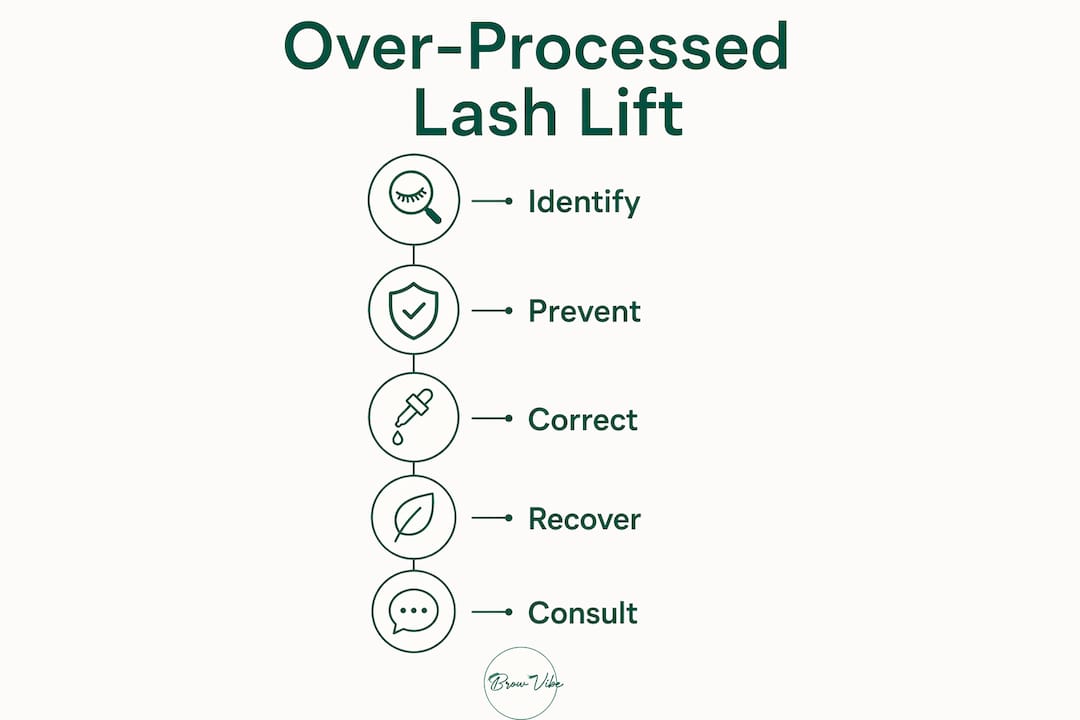
What professional methods prevent and correct over-processed lash lifts?
Prevention is the most effective correction. A thorough pre-service lash consultation identifies lash type, history of chemical treatments, and baseline health before any product touches the lash line. This assessment directly determines which formula strength and timing approach is appropriate.
Flex checks vs. fixed timers
| Method | How it works | Risk level |
|---|---|---|
| Fixed timer | Same processing time for every client | Higher: ignores individual lash condition |
| Flex check | Artist monitors lash bond release in real time | Lower: product removed at the right moment |
Flex checks prevent over-processing by targeting bond release near its limit without exceeding it. The artist checks lash flexibility at intervals and removes the solution the moment the lash reaches the correct level of softness. This approach is more accurate than any timer because lash condition changes day to day based on hydration, medication, and prior chemical history.
Corrective options when damage has already occurred
Mild over-processing, where lashes are slightly over-curled but still flexible, may respond to a corrective relaxing lift using cysteamine-based systems. These gentler formulas partially re-break and reset the lash into a less extreme position. Brittle lashes contraindicate further chemical exposure in the same session. A second chemical application on already compromised lashes risks complete breakage.
For severe frizz or brittleness, no chemical correction is safe. The only real fix is conditioning, protection, and waiting for the natural lash growth cycle to replace damaged lashes. Frizzed tips require shedding and regrowth rather than chemical repair.
Pro Tip: If a lash artist offers to immediately re-process brittle or crunchy lashes in the same appointment, decline. Conditioning first and reassessing at a follow-up visit is the safer path.
What to do if you suspect an over-processed lash lift?
Acting quickly and correctly after suspected over-processing limits long-term lash lift damage. The steps below apply whether your lashes are mildly over-curled or severely brittle.
- Stop all chemical exposure immediately. Do not book a corrective lift, tint, or extension application until your lashes pass the elasticity test. Re-processing brittle lashes risks snapping them at the base.
- Start a daily conditioning routine. Apply a lash serum or conditioning oil, such as castor oil or a dedicated lash serum, each night. Hydration restores some flexibility to mildly damaged lashes and protects the new growth coming in.
- Avoid waterproof mascara. Waterproof formulas require oil-based removers that tug on the lash line and accelerate shedding of already weakened lashes.
- Be gentle when cleansing. Pat the eye area dry rather than rubbing. Friction is the fastest way to break brittle lashes at the root.
- Book a professional consultation. A certified lash artist can assess whether a corrective relaxing lift is appropriate or whether natural lash regrowth is the only realistic path forward.
- Set realistic expectations. The average lash growth cycle runs six to eight weeks. Severely damaged lashes will not look normal until new lashes fully replace them.
- Seek medical attention for any eye symptoms. Pain, swelling, or discharge after a lash lift are not cosmetic issues. These symptoms require a doctor, not a beauty treatment.
Following solid lash lift aftercare tips from the day of your service reduces the risk of over-processing complications and supports faster recovery if damage does occur.
Key takeaways
Over-processed lash lift damage is caused by excessive chemical action on the lash’s internal bonds, and recovery depends entirely on how much structural integrity remains.
| Point | Details |
|---|---|
| Definition of over-processing | The lifting solution breaks too many disulfide bonds, leaving lashes brittle, kinked, and unable to flex. |
| Key recognition signs | Crunchy feel, frizzy tips, and lashes that stretch or snap when misted confirm over-processing. |
| Primary prevention method | Flex checks during Step 1 processing outperform fixed timers by reading each client’s lash response in real time. |
| Corrective limits | Chemical correction is only safe if lashes still pass the elasticity test; brittle lashes need conditioning and regrowth. |
| Recovery timeline | The natural lash cycle takes six to eight weeks, so severely damaged lashes require patience alongside daily conditioning. |
What I’ve learned from watching over-processing happen in real time
The most common mistake I see is not the product choice. It is the assumption that a timer is a substitute for observation. Practitioners set a clock and walk away, trusting that the formula will behave the same on every client. It does not. A client who bleaches her lashes at home, takes certain medications, or simply has finer lashes than average will over-process in half the time a standard timer allows.
The second mistake is client pressure. Clients sometimes want the most dramatic curl possible, and some artists deliver it without explaining the structural cost. A tighter curl is not always a better curl. When lash tips kink rather than arc, the result looks damaged, not lifted. Education before the service matters more than any product on the shelf.
Choosing a gentler, cysteamine-based lifting system over older, more aggressive formulas reduces the margin for error significantly. These systems give the artist more working time and produce less dramatic over-processing when timing runs slightly long. For clients, the right question to ask before any lash lift is not “how long will it last?” but “how do you monitor processing during the service?” The answer tells you everything about how seriously that artist takes lash health.
— Apna
Browvibe’s approach to safe, professional lash lifts
Lash lift damage is preventable when the right protocols are in place from the start. Browvibe’s certified beauty artists use personalized lash assessments and real-time monitoring on every client, selecting formula strength and timing based on individual lash condition rather than a one-size-fits-all approach.

Browvibe’s full range of professional lash and brow services is built around the principle that a great result never comes at the cost of lash health. Each appointment includes a full consultation so your artist understands your lash history before any product is applied. Clients who have experienced lash lift damage elsewhere consistently find that a thorough pre-service assessment changes the outcome entirely. Book a consultation with Browvibe to get a lifted look that protects your natural lashes.
FAQ
What is an over-processed lash lift?
An over-processed lash lift occurs when the chemical lifting solution breaks too many internal bonds in the lash, producing overly curled, brittle, or frizzy lashes that lack normal flexibility.
How do I know if my lashes are over-processed?
Mist your lashes lightly with water. Healthy lashes spring back to shape; over-processed lashes stretch, snap, or feel crunchy rather than flex.
Can over-processed lashes be fixed chemically?
A corrective relaxing lift using cysteamine-based products may help mild cases where lashes still pass the elasticity test. Severely brittle lashes cannot be safely re-processed and must shed and regrow naturally.
How long does it take for over-processed lashes to recover?
The natural lash growth cycle takes approximately six to eight weeks. Daily conditioning with a lash serum supports recovery and protects new growth during that period.
When should I see a doctor after a lash lift?
Seek medical attention if you experience eye pain, swelling, redness, or discharge after a lash lift. These symptoms indicate a possible chemical reaction that goes beyond cosmetic lash damage.