A lash lift consultation is a structured pre-treatment interview where your technician asks targeted questions to customize the lift, screen for safety risks, and set accurate expectations before any chemical touches your lashes. Skipping this step is the single most common reason clients end up with uneven curls, irritation, or a lift that drops within days. Whether you’re booking your first appointment or refining your lash lift process questions for a new salon, knowing what to expect from this conversation puts you in control. This guide covers every category of question a thorough consultation should include, so you walk in prepared and walk out with results that last.
1. Questions about your desired lash lift look
The first job of any consultation is to establish what you actually want. Rod choice and technique are directly shaped by your preference for a natural, subtle curl versus a dramatic, wide-open lift. These are not interchangeable outcomes. A small silicone shield produces a tight, defined curl, while a larger shield creates a softer, more elongated wave. Your technician needs to know which direction you’re heading before selecting tools.
Bring photos. This is the single fastest way to close the gap between what you picture and what your technician understands. A verbal description of “natural” means something different to every person in the room. A photo of your ideal lash look removes that ambiguity entirely.
Your technician should also ask about past lash services you’ve loved or disliked. If a previous lift felt too curled or faded faster than expected, that history directly informs the rod size and processing time selected for your appointment. These are the core questions to expect in this section:
- Do you prefer a natural lift or a more dramatic curl?
- Do you have reference photos of your ideal lash look?
- Have you had a lash lift before, and what did you like or dislike about the result?
- Are you interested in adding a lash tint to deepen the color?
Pro Tip: Bring two or three reference photos rather than one. Showing your technician what you don’t want is just as useful as showing what you do.
2. How your lash history and current routine affect the consultation
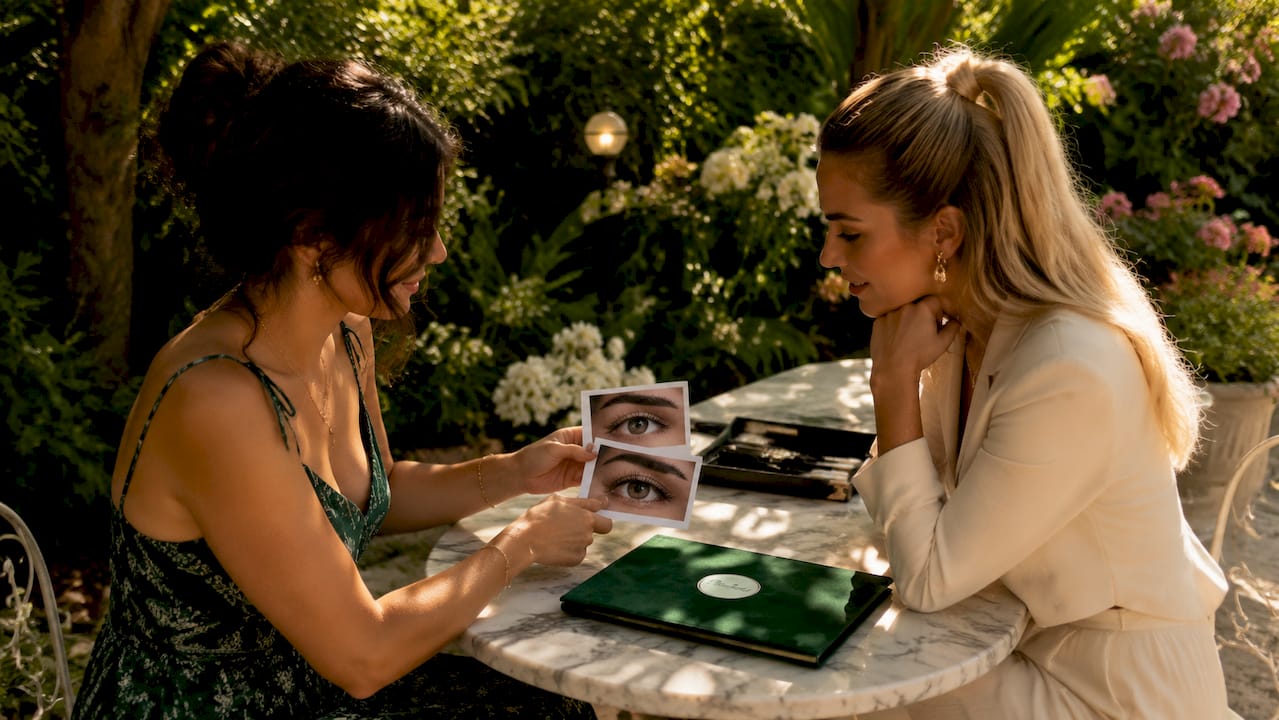
Your lash history is not just background information. Past lash treatments and routines directly impact how your technician customizes the lift and whether the treatment is safe to proceed at all. A client who had lash extensions removed two weeks ago has structurally different lashes than someone with untouched natural lashes. The technician needs to account for that.
Oil-based products are a particular concern. Mascara formulas, lash serums, and eye makeup removers that contain oils coat the lash shaft and interfere with how the lifting solution bonds. If you’ve been using an oil-based product regularly, your technician may ask you to stop using it for several days before your appointment. This is not an arbitrary rule. It directly affects whether the lift holds.
Lash serums deserve a specific mention. Products like those containing peptides or prostaglandin analogs can alter lash texture and thickness over time, which changes how the lash responds to the chemical lift. Your technician needs to know the product name and how long you’ve been using it. Key history questions include:
- When was your last lash lift, tint, or extension service?
- Have you experienced any irritation or allergic reaction from a past lash service?
- Do you currently use a lash serum, and if so, which one?
- Do you use oil-based mascara or makeup remover?
- What are your realistic expectations for maintenance and rebooking frequency?
Tracking this history accurately is part of what separates a professional consultation from a quick intake form. Platforms like client management tools used by salons help technicians document and review this information across appointments, reducing the chance of a repeated mistake.
3. Why health screening matters in a lash lift consultation
A lash lift uses chemical solutions to restructure the disulfide bonds in your lash hair. That process carries real risk for clients with certain medical conditions, active medications, or known allergies. Health and allergy screening before any chemical service is the standard that separates a safe treatment from a preventable adverse event. Your technician is not being intrusive by asking these questions. They are doing their job correctly.
The following items should appear on every health screening checklist:
- Do you have any known allergies, particularly to adhesives, latex, or chemical solutions?
- Are you currently taking any medications, including blood thinners, retinoids, or immunosuppressants?
- Do you have any active skin conditions around the eye area, such as eczema, psoriasis, or blepharitis?
- Are you pregnant or breastfeeding?
- Do you wear contact lenses, and will you be able to remove them before the appointment?
- Have you had any recent eye surgery, including LASIK?
Patch tests are recommended at least 48 hours before your appointment to identify allergic reactions before the full treatment is applied. If you experience any redness, swelling, or itching after the patch test, the appointment should be rescheduled. This is non-negotiable. Elleebana, one of the leading professional lash product suppliers, treats patch test documentation with timestamps as a core compliance requirement, not an optional step.
Pro Tip: If your salon does not offer a patch test before your first lash lift, ask for one. A technician who skips this step is cutting corners on your safety.
4. Questions that assess eye sensitivity and comfort during the procedure
Eye sensitivity is a separate category from general health screening, and it deserves its own set of questions. A client with chronic dry eyes experiences the treatment very differently from someone with no sensitivity at all. Questions about watery eyes, dry eyes, and seasonal allergies help your technician predict how comfortable you’ll be during the 40 to 80 minutes you spend lying still with your eyes closed.
This matters practically. If your eyes tend to water during allergy season, the moisture can interfere with the lifting solution during processing. If you have dry eyes, the sensation of silicone shields sitting on your eyelids may feel more intense. Neither condition is a disqualifier, but both require the technician to adjust their approach or set clearer expectations.
Sensitivity to beauty products is also worth discussing in detail. If you’ve had reactions to eyeliner, eye shadow, or eye cream in the past, your technician should know which ingredients triggered the response. This helps them evaluate whether the lifting solution or neutralizer they use contains similar compounds. Questions to expect here:
- Do you experience watery or dry eyes regularly?
- Do you have seasonal allergies that affect your eyes?
- Have you ever reacted to eye makeup, eye drops, or skincare products near the eye area?
- Do you have a preference for how you’re positioned or supported during the treatment?
5. What aftercare and maintenance questions should you expect?
Aftercare is where most lash lift results are won or lost. Keeping lashes dry for 24 hours and avoiding steam and heat during that window is the single most critical instruction your technician will give you. Moisture and heat during the first 24 to 48 hours cause the newly restructured bonds to relax before they’ve fully set, which is the leading cause of a lift that drops prematurely.
The table below covers the most common aftercare questions and what the correct answer looks like:
| Aftercare question | What you should know |
|---|---|
| How long should I keep my lashes dry? | At least 24 hours. Avoid water, steam, and sweat entirely. |
| Can I use mascara after a lash lift? | Yes, but wait 24 hours and use a water-based, non-oil formula. |
| What activities should I avoid? | Saunas, steam rooms, intense workouts, and swimming for 48 hours. |
| How do I protect the curl while sleeping? | Sleep on your back or use a silk pillowcase to reduce friction. |
| How long will my results last? | Results typically last 6 to 8 weeks with proper aftercare. |
| When should I rebook? | Plan your next appointment 6 to 8 weeks out to maintain continuity. |
Avoiding rubbing or pulling your lashes in the early post-lift period is equally important. Friction disrupts the curl before it stabilizes. If something goes wrong despite careful aftercare, knowing how to address a lift gone wrong safely is worth understanding before your appointment, not after.
Experts at Lash Lift Society note that verbal aftercare instruction delivered before the client leaves the salon produces better compliance than a printed brochure handed over at checkout. Ask your technician to walk you through each step out loud, and don’t hesitate to ask follow-up questions before you leave.
Key takeaways
A thorough lash lift consultation questions list covers desired look, lash history, health screening, eye sensitivity, and aftercare to produce safe, personalized, and lasting results.
| Point | Details |
|---|---|
| Desired look drives tool selection | Share reference photos and past service feedback so your technician selects the right rod size and technique. |
| Lash history affects safety | Disclose recent extensions, serums, and oil-based products to prevent lift failure or irritation. |
| Health screening is non-negotiable | Allergies, medications, and conditions like blepharitis must be disclosed before chemical treatment. |
| Patch testing prevents reactions | Request a patch test at least 48 hours before your appointment and cancel if irritation appears. |
| Aftercare determines longevity | Keep lashes dry for 24 hours, avoid heat and friction, and plan to rebook within 6 to 8 weeks. |
Why the consultation conversation is the treatment
I’ve seen clients arrive at appointments with a clear picture in their head and leave disappointed, not because the technician lacked skill, but because the consultation was rushed to three minutes. The lash lift consultation questions list exists for a reason. It is the mechanism by which a generic chemical process becomes a personalized result.
The part clients most often underestimate is the lash history section. People assume it’s a liability formality. It isn’t. Knowing that a client has been using a peptide-based lash serum for six months changes the processing time calculation. Knowing they had extensions removed three weeks ago changes the rod selection. These aren’t minor adjustments. They’re the difference between a lift that holds for eight weeks and one that drops in ten days.
The aftercare conversation is the other area where I see the most shortcuts. Handing someone a card with bullet points is not the same as walking them through the 24-hour window verbally, answering their specific questions, and making sure they understand why each restriction exists. Clients who understand the reasoning behind lash lift aftercare tips follow them. Clients who get a laminated card often don’t.
My honest advice: if your consultation feels like a formality, treat that as a signal. A technician who asks thorough questions before touching your lashes is the technician whose results you’ll trust.
— Apna
Book your lash lift consultation with Browvibe
Browvibe’s certified beauty artists conduct full consultations before every lash lift, covering your desired look, lash history, health screening, and aftercare in detail. Every client receives a patch test option, personalized rod selection, and verbal aftercare guidance before leaving the salon. Browvibe uses premium, safe lifting solutions and tailors processing time to your individual lash length, thickness, and eye shape. If you’re ready to experience a lash lift built around your specific needs, explore the full range of lash and brow services at Browvibe and book with a technician who treats the consultation as the foundation of the result, not a checkbox before it.
FAQ
What questions are on a lash lift consultation questions list?
A standard lash lift consultation covers desired look, lash and treatment history, health and allergy screening, eye sensitivity, and aftercare expectations. These questions allow the technician to customize rod selection, chemical timing, and aftercare instruction for each client.
How long does a lash lift appointment take?
A lash lift appointment typically takes 40 to 80 minutes depending on the method used and whether a tint is added. Your technician will confirm the expected duration during the consultation.
Do I need a patch test before a lash lift?
Yes. Patch tests should be completed at least 48 hours before your appointment to screen for allergic reactions to the lifting solution or neutralizer. Cancel and reschedule if any redness, swelling, or itching appears after the test.
How long do lash lift results last?
Results last approximately 6 to 8 weeks with proper aftercare, including keeping lashes dry for the first 24 hours and avoiding heat, steam, and friction. Aftercare compliance is the primary factor that determines how long the curl holds.
What should I tell my lash artist before the appointment?
Disclose any recent lash services, current use of lash serums or oil-based products, known allergies, medications, medical conditions affecting the eye area, and contact lens use. This information directly shapes the safety and outcome of your treatment.
6 Responses