
Brow grooming is defined as the systematic shaping, maintenance, and enhancement of eyebrow hair to improve facial aesthetics and personal presentation. The practice covers everything from daily brushing and trimming to professional treatments like threading, waxing, and brow lamination. Well-groomed brows make the face appear polished and awake without heavy makeup. Whether you are new to brow care or refining your routine, understanding the core methods and tools puts you in control of a feature that frames every expression you make.
What is brow grooming and why does it matter?
Brow grooming is the practice of brushing, trimming, and removing excess brow hair while respecting the natural growth pattern. The goal is not to create a dramatic transformation but to refine what you already have. Eyebrows frame the eyes, define the forehead, and signal symmetry across the entire face. A small amount of consistent maintenance produces a noticeably cleaner, more balanced look.
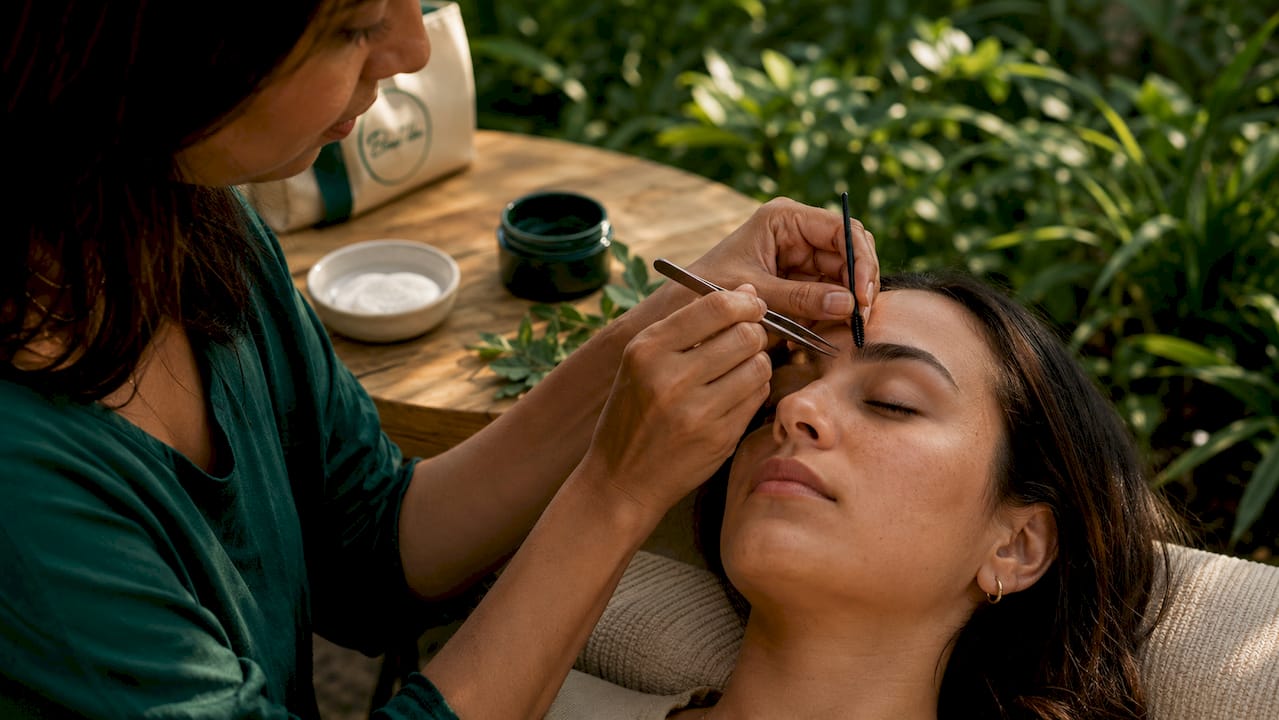
The industry term for the broader category is eyebrow grooming, which encompasses both at-home maintenance and professional shaping services. Brow taming and brow hair training are related concepts. Brow taming refers to controlling unruly or coarse hairs that grow in multiple directions, while brow hair training describes the gradual conditioning of hairs to lie flat and follow a preferred direction over time. All three concepts fall under the umbrella of brow grooming.
Professionals recommend shaping services every 6 to 8 weeks to maintain the natural growth cycle without disrupting follicle health. That schedule gives hairs time to complete their growth phase, which makes shaping more precise and results longer-lasting.
Common brow grooming techniques and how they work
The method you choose depends on your hair texture, skin sensitivity, and how much precision you need. Each technique has a distinct process and a specific set of advantages.
The main brow grooming methods:
- Tweezing: A pair of slant-tip tweezers removes individual hairs at the root. Tweezerman and Rubis are two widely trusted brands for precision work. Tweezing suits touch-ups between professional appointments and gives you the most control over single stray hairs.
- Waxing: Waxing removes multiple hairs at once by applying warm wax and pulling it away quickly. The result is clean and lasts two to four weeks. It works best for removing larger areas of unwanted growth below the brow line.
- Threading: A cotton thread is twisted and rolled across the skin, pulling hairs with chemical-free precision. Threading is the preferred method for sensitive skin and for creating a sharp, defined brow edge. Browvibe specializes in precision threading techniques that follow the natural brow line without irritating the skin.
- Trimming: A small brow scissor or dedicated trimmer clips hairs that grow too long. Trimming is a natural brow training technique because it trains hairs to stay within the desired shape without removing the follicle.
- Brow lamination: A professional treatment that perms brow hairs into a set, uniform direction. Brow lamination lasts 4 to 6 weeks and is particularly effective for thick, unruly, or downward-growing hairs. It creates the brushed-up, fluffy brow look without daily styling effort.
Pro Tip: After trimming, brush hairs upward with a spoolie before cutting. You will only remove what genuinely exceeds the brow line, which prevents accidental over-trimming.
How to map and shape eyebrows for a natural look
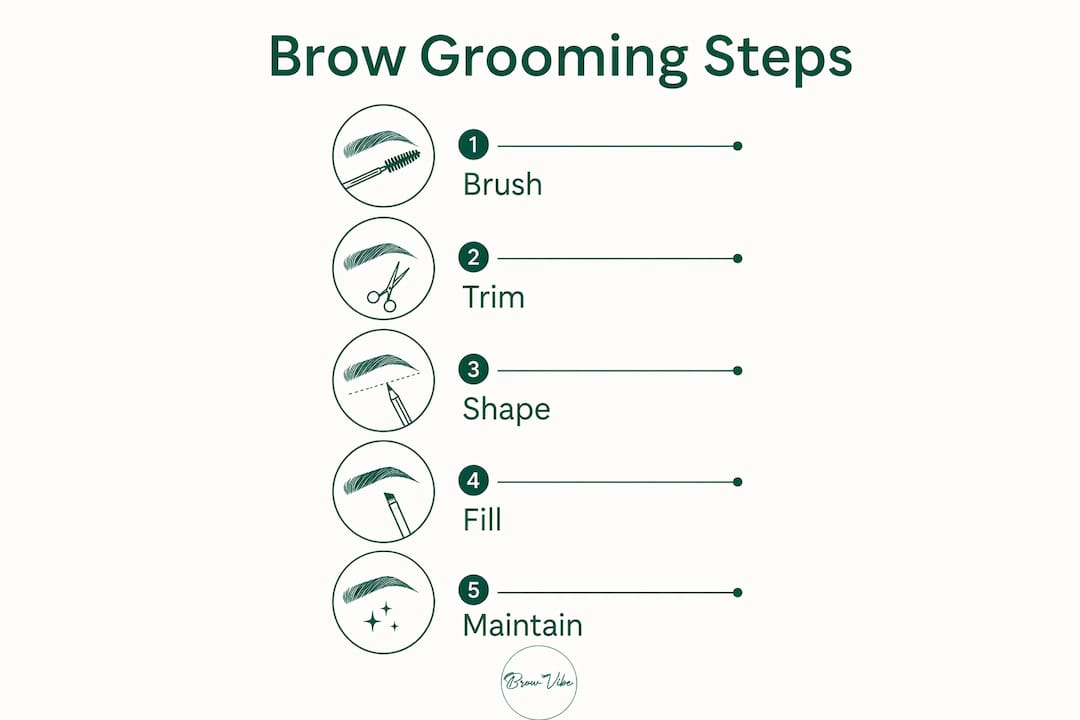
Brow mapping is the technique professionals use to identify where each brow should start, peak, and end based on your facial structure. Getting these three points right is the difference between brows that look natural and brows that look drawn on.
Here is how to map your brows using facial landmarks:
- Find the start point. Hold a straight edge (a pencil or brush handle works) vertically against the side of your nostril. Where it meets your brow bone is where the brow should begin.
- Find the arch peak. Angle the straight edge from the nostril through the center of your iris. The point where it crosses your brow is the natural arch location.
- Find the tail end. Angle the straight edge from the nostril to the outer corner of your eye. Where it meets the brow is where the tail should end. Ending the tail slightly shorter than this line prevents a droopy appearance and keeps the brow looking lifted.
- Mark lightly with a brow pencil. Use a light, erasable mark at each of the three points before removing any hair.
- Remove only what falls outside the mapped shape. Work gradually, stepping back from the mirror frequently to check balance.
Brow mapping uses these three points to create symmetry that accounts for your unique bone structure. The golden ratio provides a mathematical framework for placement, but your facial proportions always take priority over any formula.
Tweezing vs. threading: a quick comparison
| Method | Precision | Skin sensitivity | Best for |
|---|---|---|---|
| Tweezing | Very high | Low to moderate | Single stray hairs, touch-ups |
| Threading | High | Low (no chemicals) | Full shaping, sensitive skin |
| Waxing | Moderate | Moderate to high | Large areas, fast removal |
| Trimming | Moderate | Very low | Length control, brow taming |
Professionals account for individual bone structure and facial proportions when designing the initial brow shape. This is why a first professional shaping appointment produces results that are difficult to replicate at home without training.
Choosing and using brow grooming products safely
The products you use daily have as much impact on brow health as the shaping methods you choose. The wrong formula can cause more damage than a pair of tweezers.
Product types and their effects:
- Brow pencils: Fine-tipped pencils like those from Anastasia Beverly Hills or NYX fill sparse areas with hair-like strokes. They are easy to control and blend naturally.
- Brow powders: Powder formulas applied with an angled brush create a soft, diffused look. They are the gentlest option for daily use and do not coat the hair shaft.
- Brow gels: Clear or tinted gels set hairs in place. Lightweight formulas from brands like Benefit or e.l.f. work well for hold without buildup.
- Pomades: Thick, waxy formulas deliver bold, defined brows. Some heavy pomades damage hair follicles and cause brow hair shedding with repeated use. Powder-based formulas are the gentler alternative for daily wear.
Anastasia Soare, founder of Anastasia Beverly Hills, advises using cosmetic products for trendy effects rather than permanent hair removal. This protects follicle health and allows you to adjust your brow shape as trends and preferences change.
Pro Tip: Fill sparse areas with short, upward strokes using a micro-tip pencil rather than drawing a solid line. The result reads as natural hair rather than drawn-on color.
For anyone interested in vegan brow product alternatives, powder-based and plant-derived formulas are widely available and tend to be gentler on the follicle.
Common mistakes and expert tips for maintaining healthy brows
Most brow grooming problems come from doing too much, too fast. The following mistakes are the most common and the most preventable.
- Over-tweezing. Aggressive shaping can permanently damage hair follicles and prevent regrowth. If you have been over-plucking for years, the sparse patches you see now may be permanent. Shape gradually across multiple sessions rather than attempting a full redesign in one sitting.
- Using a magnifying mirror. Magnifying mirrors distort facial balance and make it nearly impossible to judge symmetry accurately. Use a standard mirror at arm’s length and step back regularly.
- Ignoring natural growth direction. Brow hair training works with the natural growth pattern, not against it. Brushing hairs against their grain daily causes breakage and makes the brow look uneven.
- Skipping professional appointments. At-home maintenance works well between visits, but a professional shapes the brow architecture. Browvibe’s certified beauty artists design each brow shape around your facial structure, which is something a mirror and tweezers cannot replicate alone.
- Overusing heavy styling products. Daily use of thick pomades coats the follicle opening and contributes to shedding over time. Rotate with lighter formulas and give brows product-free days when possible.
The role of professional maintenance is not just aesthetic. A trained brow artist spots asymmetry, uneven growth, and follicle stress that most people miss at home. Treating professional appointments as part of your brow grooming essentials, rather than an occasional luxury, produces consistently better results.
Key takeaways
Brow grooming is the combination of correct mapping, consistent maintenance, and safe product choices that produces natural, balanced brows without follicle damage.
| Point | Details |
|---|---|
| Define before you shape | Use the three-point mapping method to identify start, arch, and tail before removing any hair. |
| Match method to need | Threading and tweezing offer precision; waxing suits larger areas; trimming controls length without follicle risk. |
| Protect follicle health | Avoid heavy pomades and over-tweezing, which can cause permanent hair loss over time. |
| Schedule professional visits | Professional shaping every 6 to 8 weeks maintains the brow architecture and catches asymmetry early. |
| Train, don’t force | Natural brow hair training works with growth direction using daily brushing and lightweight gels, not against it. |
Why I stopped chasing the “perfect” brow shape
After years of working with clients at Browvibe, the single most common regret I hear is over-plucking. Someone followed a trend in their twenties, removed too much, and spent the next decade trying to fill in what no longer grows back. The brow trends that cycle through every few years, from pencil-thin arches to bold, bushy statements, are almost always achievable with products and professional shaping. They do not require permanent hair removal.
My honest recommendation is this: treat your natural brow as the foundation and use grooming to refine it, not replace it. A celebrity brow artist I respect puts it plainly. The goal is to enhance natural growth for a polished, awake face rather than forcing a shape that fights your bone structure. That philosophy is exactly what guides every appointment at Browvibe.
Patience is the most underrated brow grooming tool. Gradual shaping across multiple sessions, consistent brushing, and the right lightweight products will get you further than any single dramatic change. If you are rebuilding sparse brows, give it at least three to four months before judging progress. Follicles need time, and so does the process.
— Apna
Ready for brows that actually fit your face?
At Browvibe, every brow appointment starts with a full consultation to map your natural shape and design a grooming plan around your facial structure. The certified beauty artists at Browvibe use precision threading, gentle waxing, and professional lamination to deliver results that last without harsh chemicals or unnecessary hair removal.
Whether you are starting from scratch or refining an existing routine, Browvibe’s professional brow services are built around your individual features, not a one-size-fits-all template. Explore the full range of brow and lash treatments and book a consultation to see what a personalized grooming plan looks like in practice.
FAQ
What is brow grooming exactly?
Brow grooming is the systematic practice of shaping, trimming, and maintaining eyebrow hair to enhance facial aesthetics. It includes both at-home techniques like brushing and tweezing and professional services like threading, waxing, and lamination.
How often should you groom your eyebrows?
Professionals recommend eyebrow shaping services every 6 to 8 weeks to align with the natural hair growth cycle. Daily brushing and occasional trimming can be done at home between appointments.
What is brow hair training?
Brow hair training is the gradual conditioning of brow hairs to grow and lie in a preferred direction using daily brushing and lightweight setting gels. It is a natural technique that works with the hair’s growth pattern over several weeks.
Can over-tweezing permanently damage brows?
Yes. Aggressive or repeated tweezing can permanently damage hair follicles and prevent regrowth in affected areas. Gradual shaping across multiple sessions is the safer approach to avoid long-term thinning.
What are the best tools for at-home brow grooming?
The core brow grooming essentials for home use are a spoolie brush, slant-tip tweezers, small brow scissors, and a micro-tip brow pencil. Brands like Tweezerman for tweezers and Anastasia Beverly Hills for pencils are widely used by professionals and beginners alike.
One Response